


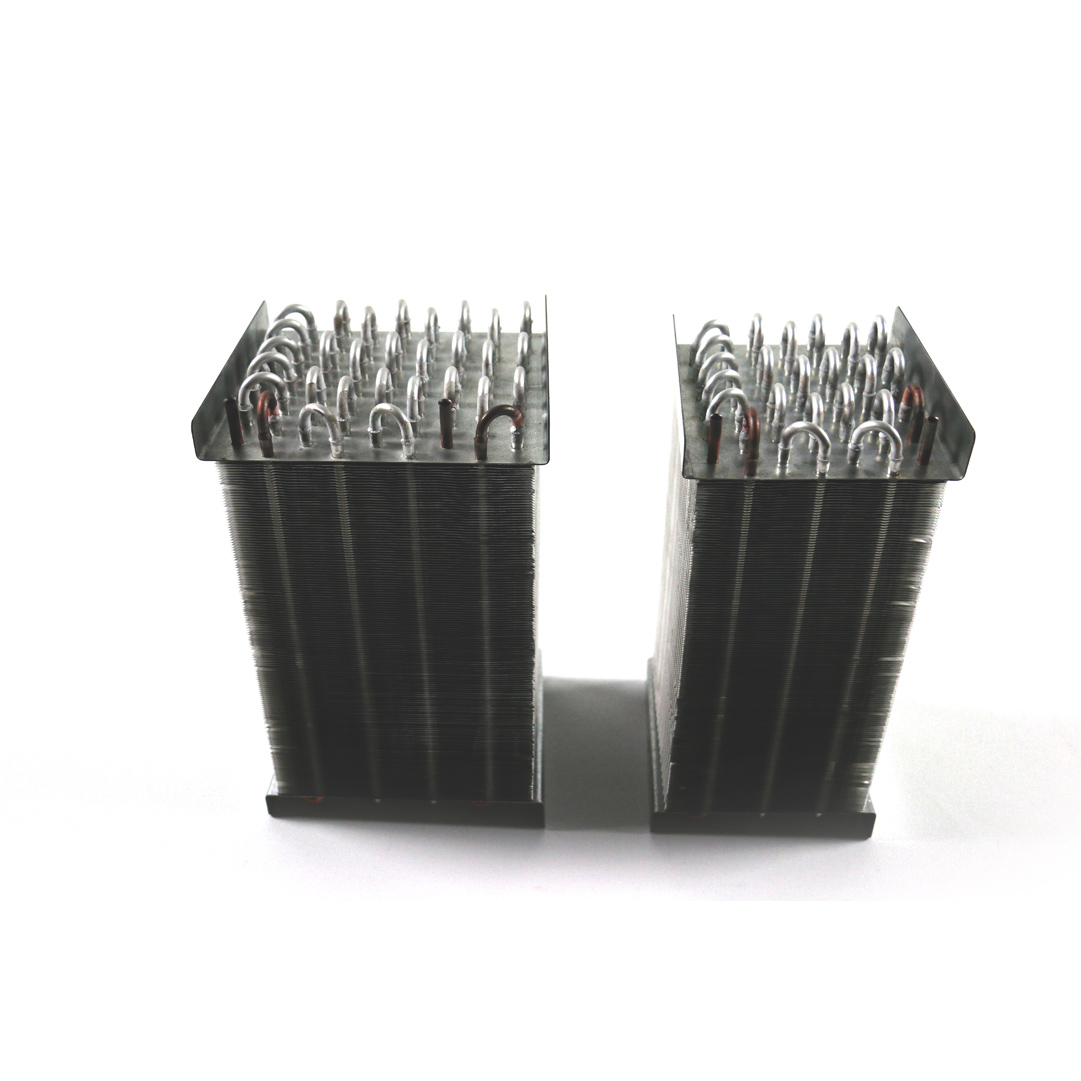
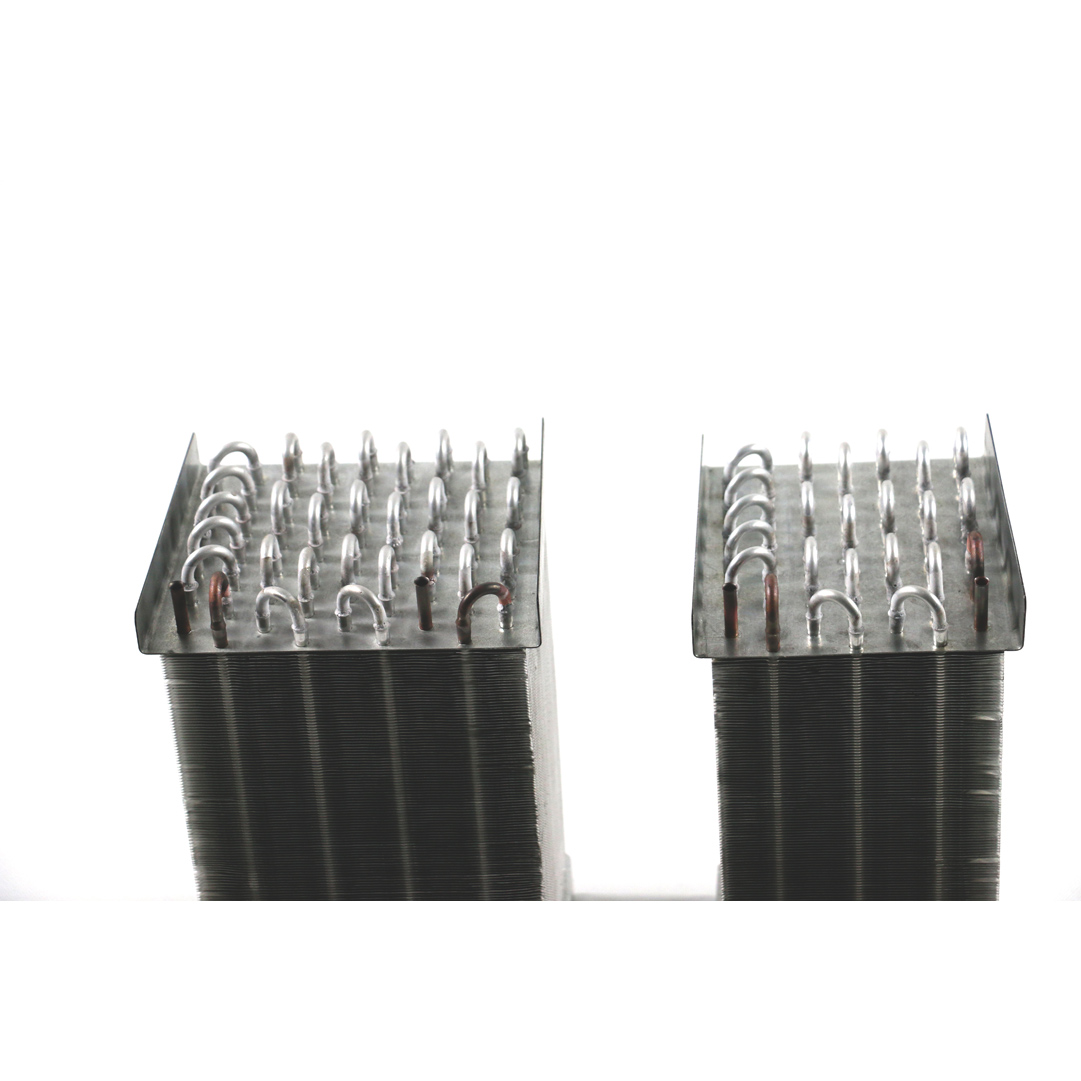
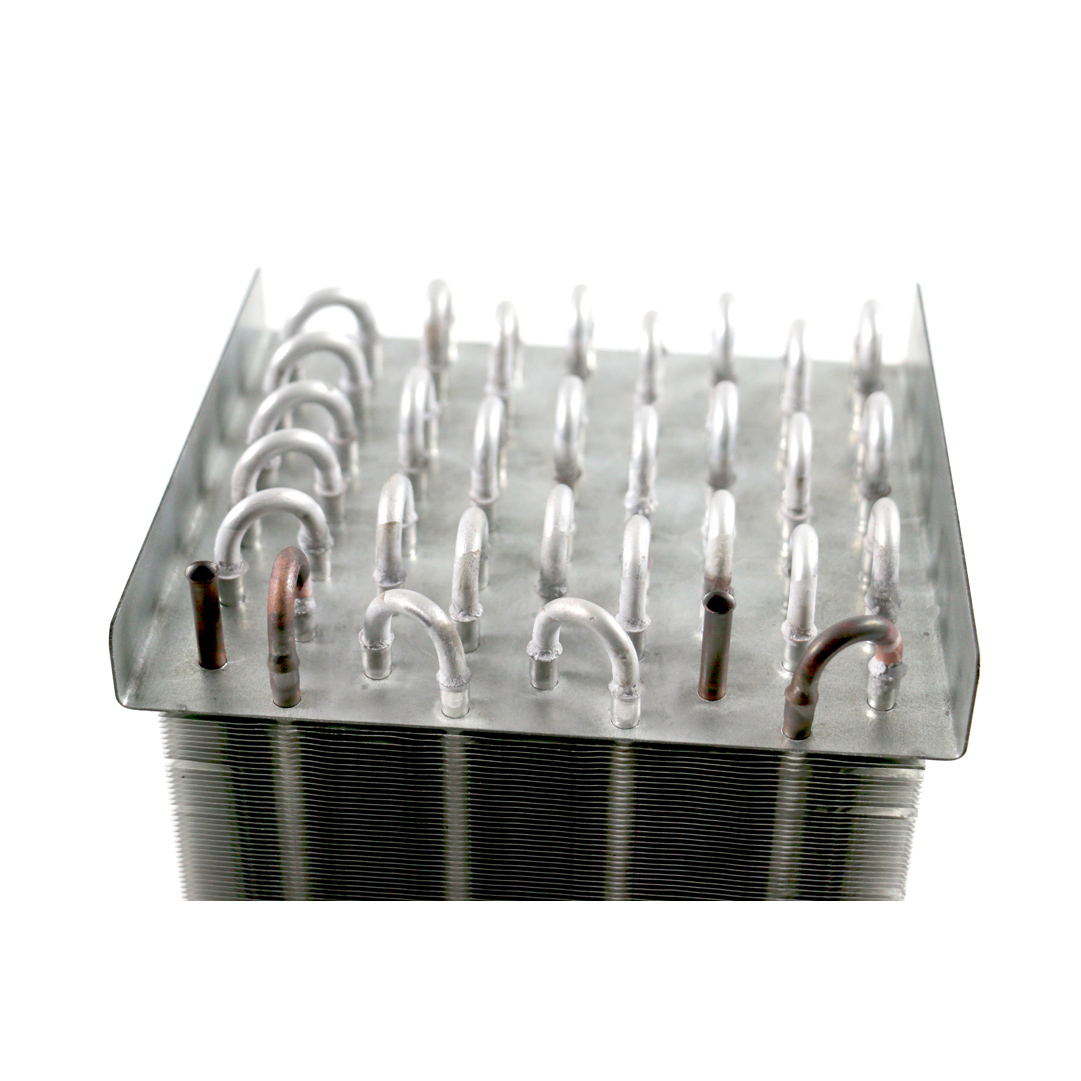
Aluminum Tube Coil Type (Expanded) Heat Exchangers


Our expanded heat exchangers come with either aluminum or copper tubes and fins, both offering high efficiency and compact design. While both perform well, their material benefits suit different project needs.
Aluminum tube heat exchangers are a top choice for projects prioritizing:
- Cost-effectiveness: Offering a more economically viable solution, reducing overall project expenditure.
- Significant weight reduction: Their lighter nature simplifies installation and reduces system mass.
- Modern, compact designs: Allowing for maximum performance in minimal space, perfect for systems with tight constraints.
- Al 3003 series corrosion-resistant aluminum tubes are used in our Al expanded products.
- Fin thickness ranges between 0.12 mm and 0.15 mm, and the fin material is either 8011 Al H24 or 8006 Al H22.
- The inlet and outlet hairpins of the heat exchanger can be made of Cu or Al, according to customer request.
- Many compact designs of the heat exchangers can be made. Also, it takes up little space in the system.
- Very low fin pitch can be provided by the current process capability. Fin space range 1.2-2.5 mm.
- Product design and production are made with a smooth aluminum tube with only a 5 mm tube diameter, a thickness of 0.4 mm, depending on customer request.
- Different designs and tube patterns can be made using the capacity calculation software.
- Lots of variety of fin designs can be made, such as flat, rippled edges, wavy, and wavy rippled edges.
- Vertical spacing x Horizontal spacing: 19.05 x 16.5 mm.
- Maximum column number: 9 (16.5 mm x 9).
- Maximum fin pack length: 1000 mm.
- Hairpin diameter: 19.05 mm.
- Highly efficient, energy-saving, and environmentally friendly product range.
- 100% Helium chamber test is applied in production to define the leakage of parts.
- Konveyor can make the fins of the heat exchangers with hydrophobic or hydrophilic coatings according to customer requests.
Aluminium 3003 series tubes offer strong corrosion resistance, providing high reliability. While copper might offer a bit more corrosion resistance than aluminum under very harsh conditions, aluminum, with its modern advantages, stands out as the preferred choice where budget and weight design are key factors. For the final design, tube material selection between copper and aluminum may be determined by our clients, aligning with their specific needs and the project’s unique requirements.
Hydrophobic
Hydrophobic coatings for heat exchangers are designed to repel water, reducing the formation of condensation and ice buildup on the heat transfer surfaces. This can improve the efficiency and performance of the heat exchanger, especially in cold and humid environments.
Benefits :
• Improved heat transfer: By reducing the formation of condensation and ice, hydrophobic coatings can improve the heat transfer efficiency of the heat exchanger. This can lead to lower energy consumption and reduced operating costs.
• Reduced fouling: Hydrophobic coatings can also help to reduce fouling, which is the buildup of dirt, debris, and other contaminants on the heat transfer surfaces. This can further improve the efficiency of the heat exchanger and extend its lifespan.
Hydrophilic
Hydrophilic coatings for heat exchangers are designed to enhance heat transfer efficiency and prevent corrosion by promoting the quick removal of water droplets from the surface. These coatings create a surface that is not easily wetted, allowing water to flow off easily instead of forming droplets that can hinder airflow and promote corrosion.
Benefits:
• Improved heat transfer efficiency: By reducing water droplet buildup, these coatings minimize the resistance to airflow, leading to better heat transfer.
• Corrosion prevention: The rapid removal of water helps prevent corrosion caused by prolonged water contact
• Reduced pressure drop: The smoother flow of water across the surface leads to lower pressure drop, improving energy efficiency